Zum Inhalt springen
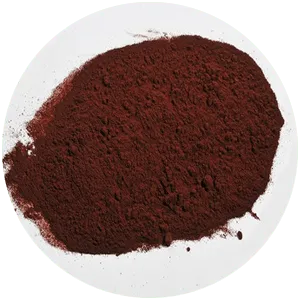
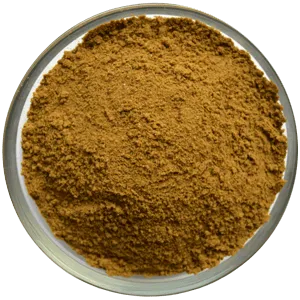
Hühnerblutmehl

Tierische Proteine

Hühnerblutmehl

Typische Nährstoffanalyse Umsetzbare Energie: 3.000/3.200 kcal Verdaulichkeit nach AOAC-Methode (Pepsin 0,2 %): 90 %

Lagerung
Raumtemperatur

Überblick

Typische Nährstoffanalyse

Umsetzbare Energie: 3.000/3.200 kcal

Verdaulichkeit nach AOAC-Methode (Pepsin 0,2 %): 90 %

Spezifikationen

HühnerblutmehlProduktblatt

Typische Analyse

Protein 89.00%
Fett 1.20%
Asche 3.50%
Feuchtigkeit 5.00%
Asparaginsäure 8.70%
Glutaminsäure 9.60%
Alanin 8.10%
Arginin 4.10% 3.23% 3.16%
Cystin 1.10%
Met + Cystin 2.50% 1.80% 1.90%
Phenylalanin 6.50% 5.29% 4.65%
Glycin 3.95%
Isoleucin 0.94% 0.61% 0.75%
Histidin 5.80% 4.57% 4.27%
Leucin 12.80% 10.71% 8.98%
Lysin 9.50% 7.33% 7.34%
Methionin 1.40% 1.12% 1.07%
Prolin 4.50%
Serin 3.00%
Phenylalanin + Tyrosin 8.15% 5.51% 6.27%
Tyrosin 1.65%
Threonin 5.00% 3.99% 3.66%
Tryptophan 0.40% 0.31% 0.30%
Valin 8.00% 6.16% 5.61%

Ähnliche Produkte

  • Truthahnmehl

    Tierische Proteine

    Truthahnmehl

    Zutatenerklärung Geflügelnebenproduktmehl, Antioxidans (Pflanzenöl, Butylhydroxyanisol, Butylhydroxytoluol und Lecithin) „als Konservierungsmittel verwendet“ Typische physikalische Eigenschaften Farbe: hell- bis mittelbraun Geschmack: mild, dezent, Aroma von gekochtem Geflügel…
  • Deproteinisiertes Molkenpulver

    Tierische Proteine

    Deproteinisiertes Molkenpulver

    Deproteinisiertes Molkenpulver wird hergestellt, indem ein Teil des Süßmolkenproteins durch Ultrafiltration entfernt wird, sodass ein Trockenprodukt mit über 80 % Laktose entsteht. Typische Nährstoffanalyse Mikrobiologie Mineralstoffe Vorteile Wirtschaftlicher Ersatz für…

  • Lachsmehl

    Tierische Proteine

    Lachsmehl

    Haltbarkeit: 24 Monate ab Produktionsdatum Verpackung: Säcke zu 25 kg, 50 kg und 1.250 kg

  • Tintenfischmehl

    Tierische Proteine

    Tintenfischmehl

    Enthält keinen nennenswerten Cholesterinwert. Haltbarkeit: 18 Monate Verpackung: 50 kg